
Traditional Holidays in Transition (advanced)

Preview

Different traditions

Ravi

Hi Ravi! Are you excited for Thanksgiving?

14:20

Hey Emily! Yes, I am! How do you celebrate it in the US?

14:23

We have a big family dinner with turkey, stuffing, and pie. What about you? You're from India, right?

14:25

Yes, I am! We celebrate it a bit differently here. We usually have a potluck with family and friends, and everyone brings a dish. It's more like a big feast with lots of different foods.

14:28

That sounds fun! My grandparents told me that in the past, people also used to have big community dinners in church halls or community centers. Do you have any old traditions like that in India?

14:30

My grandparents said that when they were young, they used to celebrate with their whole neighborhood. Everyone would cook together, and it was more about sharing and spending time with the community.

14:33

Wow, that's so interesting! I kind of wish we still did that here. It sounds like a great way to bring everyone together.

14:35

Yeah, it's nice. But nowadays, it's mostly just family gatherings. Do you have any special activities you do on Thanksgiving?

14:37

We usually watch the Thanksgiving Day parade on TV and then football in the afternoon. How about you?

14:39

We play games and sometimes watch movies together. It's a fun way to spend time after the big meal.

14:41

That sounds nice! I hope you have a great Thanksgiving, Ravi!

14:43

Thanks, Emily! You too! Enjoy your turkey and pie!

14:45

I will! Talk to you later!

14:46

Bye!

14:47
Icon

How do you celebrate?

Read the chat conversation and talk about it in class: Do you celebrate this traditional holiday, and if so, how? Do you know of any other customs associated with this day?

Traditional holidays in different countries

The traditional holiday is celebrated differently in various countries. Can you correctly match the traditions?

Match the country with the tradition.

Traditional holidays in transition

Have a look at how traditions associated with the traditional holiday have changed over the course of several centuries.

John, 1621

John, 1621
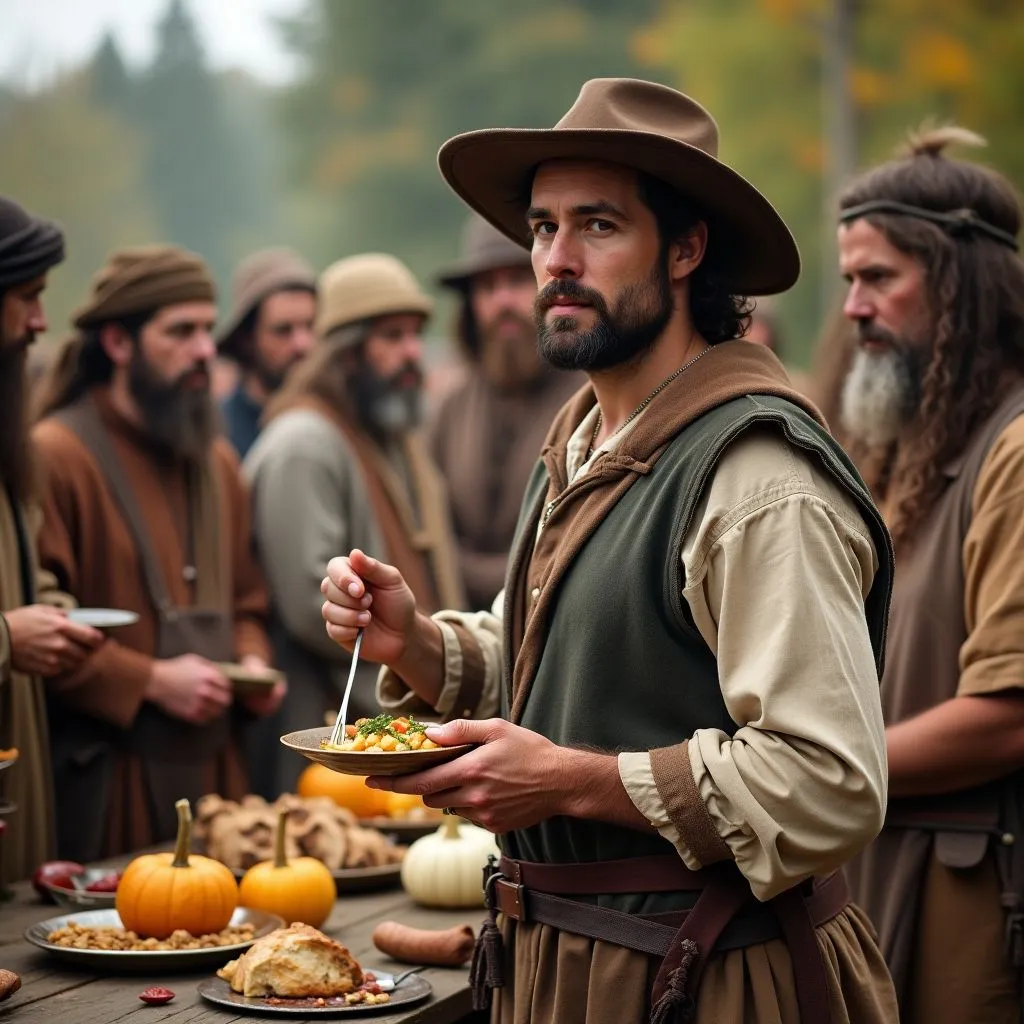
My name is John, and the year is 1621. We celebrate Thanksgiving in the Plymouth Colony, which will one day become part of the United States. This year, we are especially grateful for the help of the Native Americans, who taught us how to grow corn and showed us where to fish. We gather together with them to share a feast of wild game, corn, and squash. It is a simple but significant celebration of survival and cooperation.
John describes the first Thanksgiving in 1621, highlighting the early settlers' gratitude towards Native Americans and the humble, shared feast.

Emma, 1945

Emma, 1945
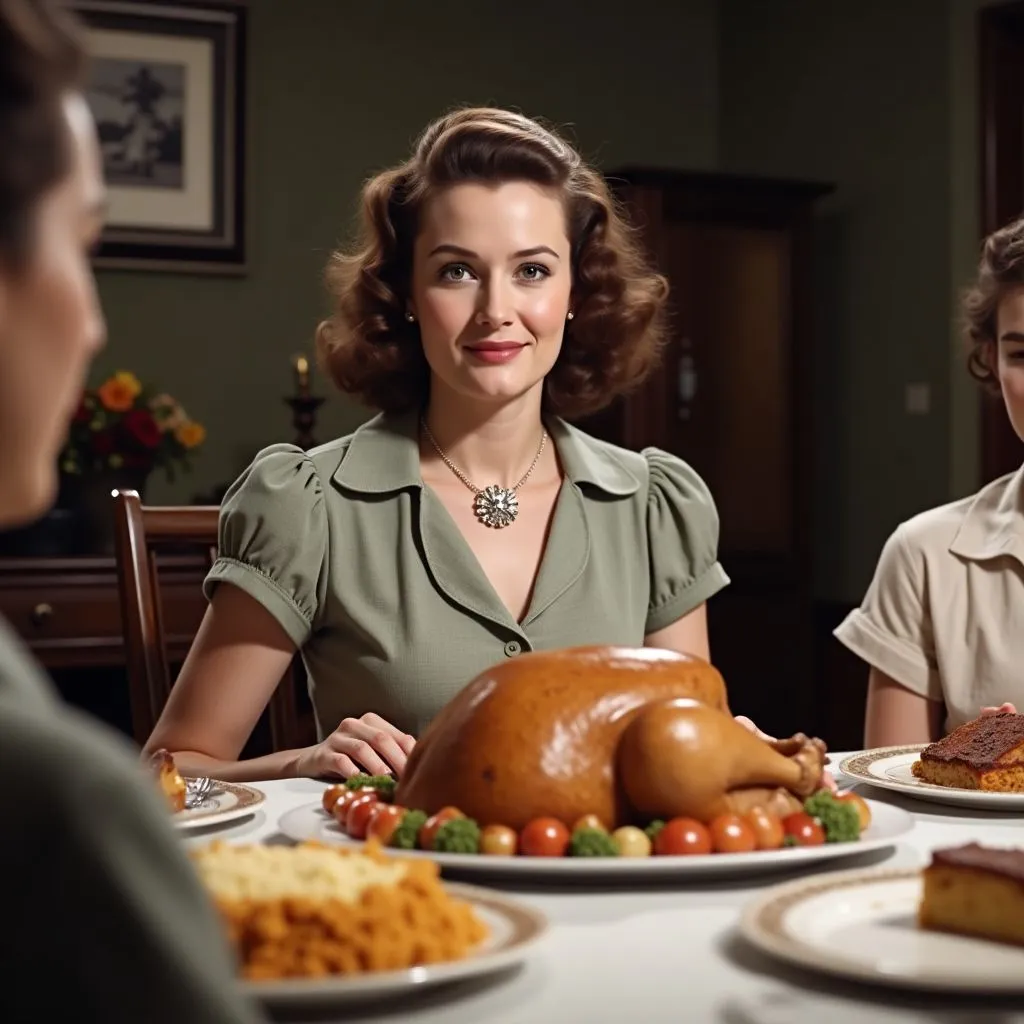
My name is Emma, and the year is 1945. We celebrate Thanksgiving in the United States with a sense of relief and hope as World War II has just ended. Our family gathers around a large dinner table, enjoying a feast of roast turkey, mashed potatoes, green beans, and pumpkin pie. It's a time for giving thanks for the end of the war and the return of our loved ones. We listen to the President's Thanksgiving proclamation on the radio and reflect on the importance of peace and family.
Emma describes a 1945 Thanksgiving, emphasizing the post-World War II relief, traditional meal, and family unity.

Liam, 2023

Liam, 2023
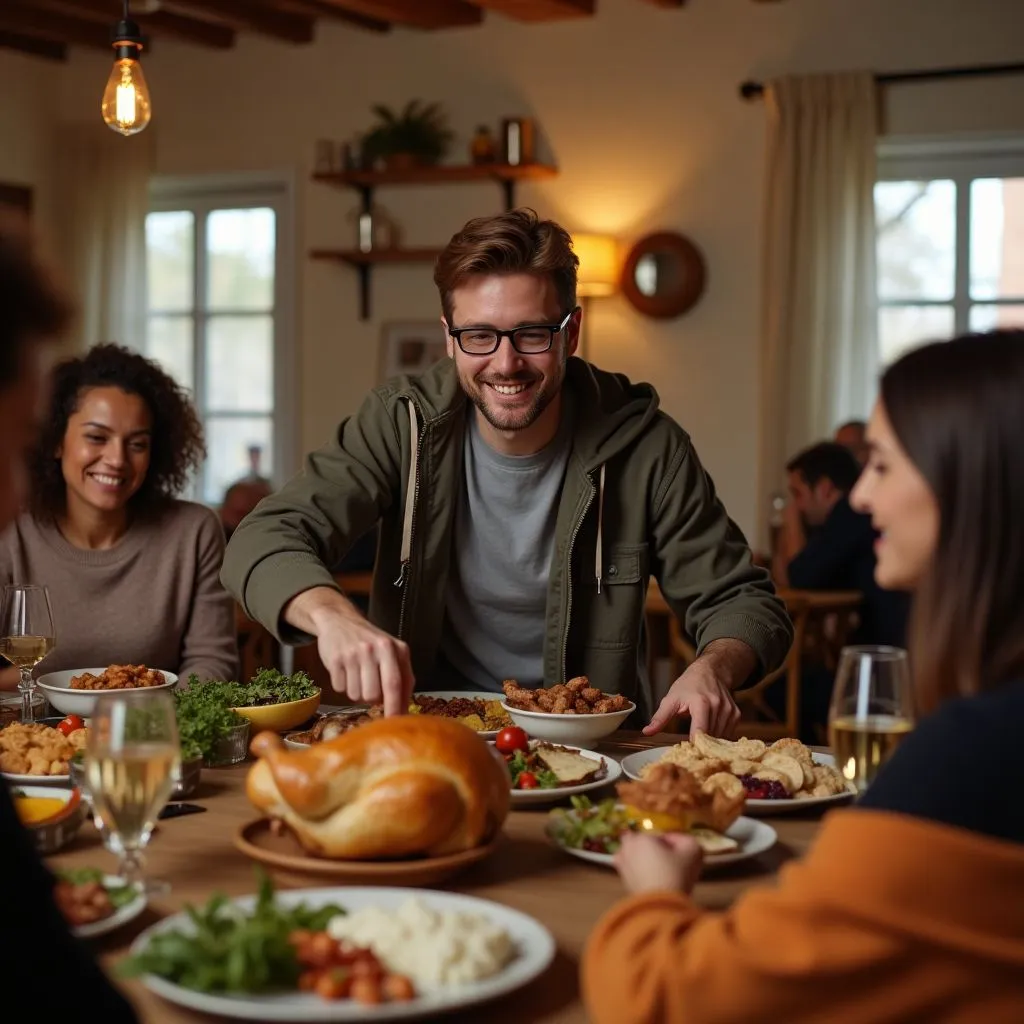
My name is Liam, and the year is 2023. We celebrate Thanksgiving in the United States a bit differently now. While some of us still gather with family, many of us also celebrate 'Friendsgiving' with close friends. Our meals include traditional dishes like turkey and stuffing, but also feature new favorites like vegan options and international cuisine. It's a time to appreciate our chosen families and reflect on inclusivity and community. We share what we are thankful for and enjoy a relaxed, diverse celebration.
Liam describes a 2023 Thanksgiving, highlighting the contemporary 'Friendsgiving' trend, inclusion of various cuisines, and the focus on community and inclusivity.

A different side of the tradition

Now read the newspaper article on the following page. What problem is being addressed here?

National Day of Mourning: Remembering the True History

Every year, on the fourth Thursday in November, while many Americans celebrate Thanksgiving, a gathering takes place in Plymouth, Massachusetts, to honor a different tradition. The National Day of Mourning is an annual protest that highlights the struggles and history of Native American communities, particularly the Wampanoag tribe. This event, which began in 1970, seeks to dispel the myths surrounding Thanksgiving and draw attention to the historical and ongoing injustices faced by Native Americans.

The National Day of Mourning plaque on Cole's Hill in Plymouth, Massachusetts. Source: Melissa Doroquez (CC BY-SA 2.0)

This poignant event was initiated by Frank "Wamsutta" James, a leader of the Wampanoag Tribe, after he was barred from speaking at a Massachusetts Thanksgiving celebration. Instead, he delivered his speech on Cole's Hill, beside a statue of Ousamequin. Since then, the United American Indians of New England (UAINE) has organized the annual gathering, which now attracts hundreds of participants who come to honor their ancestors and protest against the racism and oppression that Native Americans continue to face.

The National Day of Mourning serves as a powerful reminder of the true history behind Thanksgiving. Participants use the day to educate the public on Native American history, dispel the myths perpetuated by the traditional Thanksgiving narrative, and bring awareness to the struggles that Native American communities still endure. In recent years, the event has seen a significant increase in attendance, with virtual participation amplifying its reach and impact.

This year, as families across the nation gather to celebrate Thanksgiving, let us also remember the voices that call for reflection and acknowledgement of a history that is often overlooked. The National Day of Mourning stands as a testament to the resilience and enduring spirit of Native American communities.

Icon

Criticism of traditional holidays

Although traditional holidays are celebrated often and with enthusiasm, there are also frequently negative aspects associated with them. Can you imagine what points might generally be criticized about traditional holidays?

Collect your ideas together in the class.

Discussion - Partner Work

Now prepare a discussion with role cards in partner work. One of you will take the pro position, and the other person will take the contra position. In addition to the arguments on the role cards, try to find other arguments for your position.

Sophia (pro)

Sophia (pro)
My name is Sophia, and I love celebrating Thanksgiving. It's a wonderful time to gather with loved ones, share a delicious meal, and reflect on everything we are grateful for. The tradition of coming together, whether with family or friends, fosters a sense of community and togetherness. I especially appreciate the opportunity to relax and enjoy each other's company, creating lasting memories and strengthening our bonds.
Sophia highlights the positive aspects of Thanksgiving, including family gatherings, shared meals, and the sense of community and gratitude the holiday fosters.

David (contra)

David (contra)
My name is David, and I have mixed feelings about Thanksgiving. While many see it as a day of celebration, I believe we need to critically examine its origins and impact. The holiday often glosses over the historical injustices faced by Native Americans and can perpetuate harmful myths. Additionally, the environmental impact of large-scale food production and waste during this time is concerning. I think it's important to rethink how we celebrate, focusing on sustainability and acknowledging the complex history behind the tradition.
David critically examines Thanksgiving, highlighting historical injustices, cultural myths, and environmental concerns. He advocates for a more thoughtful and sustainable approach to the holiday.

Further arguments

Discussion

Now have a discussion with your partner and try to convince them of your opinion.

Icon

Discussion in class

Discuss the results of your discussion rounds in class: Which position was more convincing?

Now also ask yourselves the question of what relevance such traditional holidays still have today and discuss this together as a class.

Further questions

Choose one of the following three questions, and answer them in a short text.