
Advantages and disadvantages of AI-generated content
Preview
What is AI-generated content?
Artificial intelligence (AI) can independently generate content such as text, images, videos, or music. These are used in schools, workplaces, and the media, for example.
Explain in 2–3 sentences what you understand by AI-generated content.
⚖️ Assessment of statements about artificial intelligence
Check the box that best describes your assessment of each statement:
| Statement | reliable | questionable | dangerous |
|---|---|---|---|
| AI is always objective. | |||
| AI can help with learning. | |||
| AI will soon replace all professions. |

Comparison task
For each statement, decide whether it describes an advantage or a disadvantage, and come up with your own examples.
⚖️ Advantages and disadvantages of artificial intelligence
Check whether you see the statement as more of an advantage or a disadvantage. You can get creative with your own ideas:
| Statement | Advantage | Disadvantage |
|---|---|---|
| Fast content creation | ||
| Support for learning and working | ||
| Fake news or deception | ||
| Data protection and copyright issues | ||
| Provides ideas and inspiration | ||
| Provides a lot of information from the Internet | ||

How can you recognize responsible AI use?
Finish the given sentences.
Formulate two rules for when the use of AI is appropriate.
Formulate two rules for when the use of AI is problematic.

Assignment
Read through the case study and answer the following questions about the text.
BTS Fan's AI-Generated Song
When a fan uses artificial intelligence to predict BTS's new song "Swim" before its official release, the event sparks a debate on AI-generated content's impact on the music industry.
In one light, AI technology can foster creativity among fans, enabling them to engage with their favorite artists on a deeper level. The fan-generated version of "Swim" offers a fresh take on what the song might sound like, stirring excitement and anticipation for the official release. This interaction highlights AI's potential to enrich fan experiences while keeping them connected to their idols.
On the flip side, this incident raises concerns about authenticity and originality in music creation. The premature AI-generated version could overshadow the genuine artistic expression intended by BTS, potentially affecting how fans perceive the band's creativity and innovation. Moreover, it brings to the forefront issues of copyright and intellectual property, as AI can replicate musical styles, potentially infringing on artists' rights.
The scenario illustrates the dual nature of AI's influence on the creative industry. While it can democratize content creation, it also challenges the boundaries of ownership and originality, prompting discussions on how to balance technological advancement with cultural and ethical considerations.

Decision task: What would you do?
You will conduct a role-play based on the case study. Each group member will take on a specific role and decide how to proceed in the given situation.
Phase 1: Preparation
- Read the case study carefully once more.
- Prepare for the discussion from the perspective of your role:
- What is your goal?
- What arguments will you present?
- What concerns or demands do you have?
Phase 2: Role-Play
Act out a conversation to decide:
How should the use of AI be handled in this case?
Phase 3: Decision & Evaluation
Record the outcome of your role-play.
Group Decision:
- AI use permitted
- AI use partially permitted
- AI use not permitted
Reflection:
Please answer one of the following questions:
- How did you feel in your assigned role?
- Were there conflicts between the different roles? Why?
- Did the role-play change your personal opinion on AI?
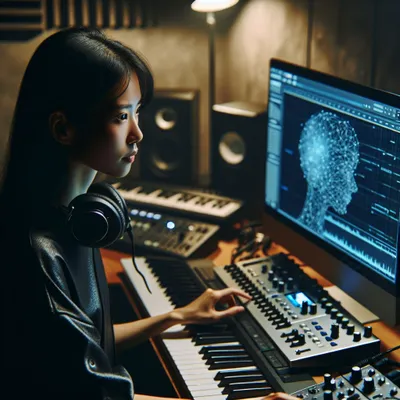
Music Producer
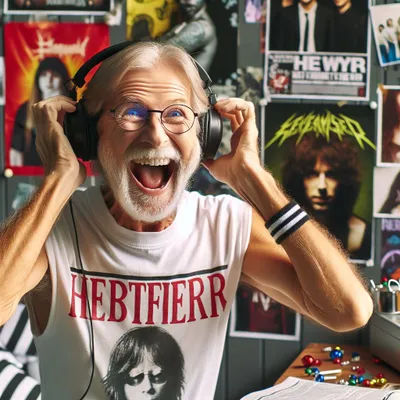
BTS Fan

Copyright Lawyer

Phase 1
What is your goal?
What arguments do you put forward?
What concerns or demands do you have?

Phase 2
How should the use of AI be handled?
Write down your collected arguments here.

Phase 3
Group decision:
- AI use permitted
- AI use partially permitted
- AI use not permitted

Group evaluation
Briefly present your group's results to the whole class. Use the following table to record the decisions made by the other groups and identify similarities and differences. Then answer the questions as a class.
- Majority decision: Which result occurred most frequently? Why do you think that was the case?
- Differences: Were there groups with completely different results? What was the main argument that tipped the scales?
- Role influence: How strongly did the roles (student, teacher, technology enthusiast) influence the decision?
| Group | AI use permitted | AI use partially permitted | AI use not permitted |
|---|---|---|---|
| Group 1 | |||
| Group 2 | |||
| Group 3 |