Was beeinflusst unser Klima?

TT
by to-teach Team
4 pages5./6. KlasseGeography
Template

Loading preview…

Your worksheet

Add a factor that influences the climate. In a text and an audio file, learners receive more information about the factor that influences the climate.

Need an idea?

Popular topics from other teachers

How our AI templates work

  • Content gets adapted

    Examples, texts and tasks match your focus.

  • Method & structure stay

    The didactically reviewed structure of the template won't change.

Description

Zielsetzung: Die Lernenden können einen ausgewählten Einflussfaktor auf das Klima verstehen und den Zusammenhang zwischen Einflussfaktor und Klima erklären.

Inhalt und Methodik: Anhand von textbasierten und audiobasierten Informationen setzen sich die Lernenden mit den wichtigsten Aspekten eines ausgewählten Einflussfaktors auseinander. Mithilfe dieser Informationen können die Lernenden den Einflussfaktor in Zusammenhang mit dem Klima erklären. Die Informationen können bei Bedarf mit einem Kreuzworträtsel vertieft werden.

Kompetenzen:

  • Lesekompetenz fördern
  • Beurteilen bzw. Erklären geographischer Zusammenhänge

Zielgruppe und Niveau: 5./6. Klasse

Similar worksheets

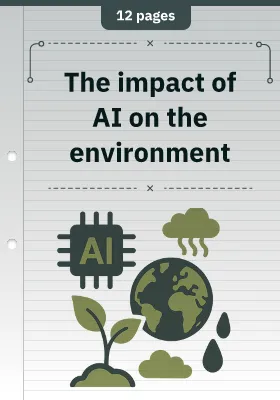
The impact of AI on the environment

The impact of AI on the environment

Objective: The worksheet aims to raise learners' awareness of the environmental impact of artificial intelligence (AI). It trains them to critically analyse the energy and resource consumption of data centres in order to develop strategies for the environmental sustainability of AI technology, particularly through the use of renewable energies.


Contents and methods: The worksheet begins with a warm-up on the learners' personal attitudes towards AI and climate change, followed by information about AI data centres in a selected country/city. Learners analyse advantages and environmental risks using text and cause-and-effect analyses. Methods such as group research, perspective changing and decision-making encourage reflection on sustainability and concrete measures for environmental responsibility.


Competencies:

  • Sustainability awareness: Understanding the ecological footprint of digital technologies (energy and resource consumption).
  • Critical analysis: Weighing technological advantages (climate research, smart farming) against environmental risks.
  • Problem solving: Developing concrete strategies to promote energy efficiency and the use of green energy sources for AI.
  • Understanding of roles: Making informed political decisions from an environmental policy perspective.


Target group and level: Years 8–10 (middle school)


ESD:

  • 12: Responsible consumption and production patterns: This addresses the challenge of raw material extraction (rare earths) and the need for recycling and sustainable procurement.
  •  13: Climate action: The text highlights the role of AI in reducing global emissions and in climate research.

non-subject specific contentEthicsGeographyPoliticsSustainable Development Goals (SDG)