

Countdown to Summer
9

Focus on women
6
Mediation
6
Spanish
Filters
Worksheets
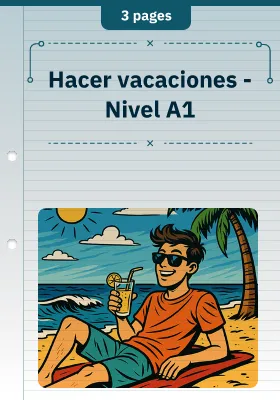
Hacer vacaciones - Nivel A1
Objective: This worksheet aims to provide students with basic information about a country as a travel destination and to enable them to talk about their own vacation experiences.
Content and Methods: It describes the geography, climate, sights, and the importance of tourism within the country. Methods include reading comprehension, true/false questions, and a structured writing task about the students’ own vacations.
Competencies:
- Reading comprehension
- Geographical knowledge
- Written expression
Target Audience and Level: Spanish learners at A1 level
Búsqueda de empleo: solicitud, entrevista de trabajo - Nivel A2
Objective: This worksheet aims to help learners understand the pros and cons of a particular profession and prepare them for a job interview.
Content and Methods: A text describes the profession, including its advantages and disadvantages. A dialogue scenario for a job interview serves as a basis for learners to practice in a role-play. Detailed role cards provide guidance on emotions and goals. A checklist supports preparation for the job application.
Competencies:
- Vocational knowledge: Understanding the requirements of the profession
- Communication: Preparing for and conducting a job interview
- Self-reflection: Reflecting on one’s own abilities
Target group and level: Spanish learners at A2 level
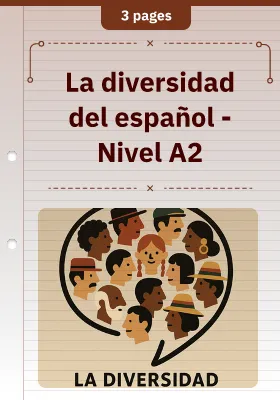
La diversidad del español - Nivel A2
Objective: This worksheet aims to familiarize students with linguistic diversity in Spanish. It is designed to raise awareness of the coexistence of Spanish and other languages in Spanish-speaking regions and to encourage students to engage creatively with the topic of multilingualism.
Content and Methods: A text explains the linguistic situation in a Spanish-speaking region. It also addresses new language trends such as Spanglish and neologisms. The worksheet includes multiple-choice questions, word identification exercises, and a creative group activity in which students are asked to invent their own language.
Competencies:
Linguistic knowledge: Understanding of multilingualism and language contact
Critical thinking: Reflection on the development of languages
Creativity: Inventing words and a new language
Target audience and level: Spanish learners at A2 level
La vida en un país hispanohablante - Nivel A2
Objective: This worksheet aims to help students understand life in a Spanish-speaking country and enable them to describe their own country.
Content and Methods: It covers attitudes toward life, social dynamics (generational conflicts, marginalized groups), migration, and the importance of tourism in a selected country. Methods include reading comprehension, selecting specific statements from the text, and a structured task to describe one’s own country.
Competencies:
- Reading comprehension
- Understanding of sociocultural and geographical aspects
- Written expression
Target group and level: Spanish learners at A2 level
Medios de comunicación - Nivel A2-B1
Objective: This worksheet aims to help learners understand the advantages and disadvantages of media and encourage them to use it responsibly.
Content and Methods: It covers the opportunities and challenges of new and traditional media, as well as their various uses. Methods include reading comprehension, multiple-choice questions, filling out tables, and a group discussion.
Competencies:
- Reading comprehension
- Critical thinking about media
- Communication and discussion skills
Target audience and level: Spanish learners at A2 level
Los tiempos en español
Objective: This worksheet aims to teach learners Spanish verb tenses.
Content and Methods: It explains the use of verb tenses, the conjugation of regular and some irregular verbs, as well as signal words. Exercises include fill-in-the-blank texts and multiple-choice questions.
Competencies:
- Verb conjugation
- Grammar application
Target audience and level: Spanish learners at A1-C1 level
Note: Here you will find additional exercises on the individual tenses: Spanish exercises
Forma de alimentación - Nivel A2-B1
Objective: This worksheet aims to introduce learners to the concept of different dietary options and the basics of restaurant planning.
Content and Methods: It explores the motivations, challenges, and opportunities associated with specific dietary choices. It also covers key aspects of starting a restaurant. Methods include reading comprehension, multiple-choice questions, open-ended questions, and a group activity on restaurant planning.
Competencies:
- Reading comprehension
- Understanding of nutrition and gastronomy
- Planning and teamwork
Target audience and level: Spanish learners at A2 level
ESD:
- SDG 12 (Responsible Consumption and Production): Promoting sustainable consumption patterns in the area of nutrition
- SDG 13 (Climate Action): Raising awareness of the environmental impacts of food
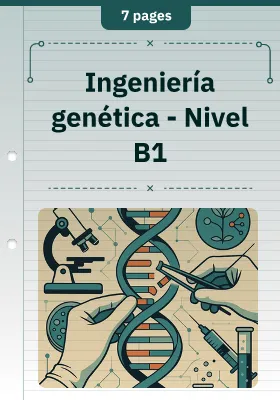
Ingeniería genética - Nivel B1
Objective: This worksheet aims to provide students with a basic understanding of genetic engineering and to facilitate a discussion of its advantages and disadvantages, particularly as they relate to fruits and vegetables.
Content and Methods: It explains the basics of genetic engineering and its applications (medicine, agriculture, research). The focus is on genetic engineering in fruits and vegetables, its advantages (pesticide resistance, productivity, nutritional value, climate adaptation), and concerns (environment, health, acceptance, costs). Methods include a prior knowledge assessment, multiple-choice questions, open-ended questions, and expressing an opinion in letter form.
Competencies:
- Reading comprehension of scientific texts
- Critical thinking about biotechnology
- Argumentation and written expression skills
Target audience and level: Spanish learners at B1 level
ESD:
- SDG 13 (Climate Action): Exploring climate adaptation
- SDG 15 (Life on Land): Raising awareness of biodiversity conservation
Canciones en español - Nivel A1-B1
Objective: This worksheet aims to develop students’ listening comprehension and creative writing skills using Spanish songs.
Content and Methods: It is based on a song in which students must fill in the blanks in the lyrics and answer questions about the content. The structure of songs is then explained to guide students in writing their own songs in groups.
Competencies:
- Listening comprehension
- Creative writing
- Teamwork
Target audience and level: Spanish learners at A1-B1 level
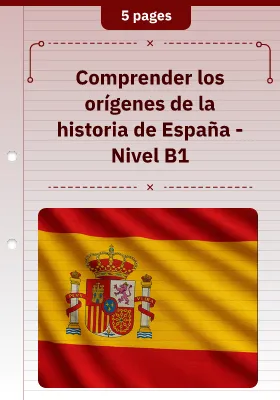
Comprender los orígenes de la historia de España - Nivel B1
Objective: This worksheet aims to provide learners with a basic understanding of Spanish history and to practice their written communication skills.
Content and Methods: It covers the origins and key periods of Spanish history, including historical facts and a fictional letter from the past. Methods include listening and reading comprehension, multiple-choice and true/false questions, and a letter-writing task.
Competencies:
- Listening and reading comprehension
- Historical knowledge of Spain
- Written communication
Target audience and level: Spanish learners at B1 level
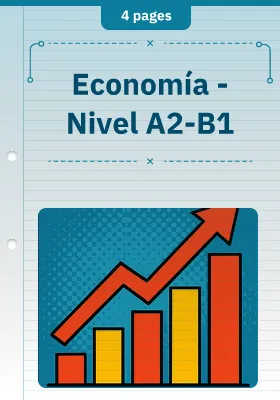
Economía - Nivel A2-B1
Objective: This worksheet aims to provide learners with a basic understanding of the Spanish economy and gross domestic product (GDP).
Content and Methods: It covers a country’s economy (sectors, challenges, opportunities) and explains the concept of GDP. Methods include reading comprehension, multiple-choice questions, and describing the economy.
Competencies:
- Reading comprehension
- Understanding of basic economic concepts
- Written expression
Target audience and level: Spanish learners at A2 level
ESD:
- SDG 8 (Decent Work and Economic Growth): Addressing sustainable economic opportunities for the future
- SDG 9 (Industry, Innovation, and Infrastructure): Promoting innovation in the green economy
Cuentos cortos - Nivel A1
Objective: This worksheet aims to improve students’ reading comprehension and language skills through the use of short stories.
Content and Methods: The content of the worksheet is a short story. Methodologically, the worksheet involves reading and understanding the text, multiple-choice questions to assess comprehension of details, and open-ended questions that encourage learners to describe their own experiences in relation to the text they have read.
Competencies:
- Reading comprehension
- Information retrieval
- Written expression
Target audience and level: Spanish learners at A1 level
Fetching more worksheets...
Next Page